

Why Future Ready Pathways?
Today’s learners are growing up in a world that moves at the speed of innovation. They are more globally connected, digitally fluent, and career-conscious than any previous generation.1 At the same time, they are questioning whether their education aligns with workforce needs and whether the investment in a traditional college program is worth the cost. Many learners are asking a tough but honest question: Is what I’m learning really preparing me for the future I want? At a time when over 80% of good-paying jobs require some form of postsecondary education2 and more than half require a bachelor’s degree or higher, the stakes are high to get it right. At the same time, only 37% of high school graduates are college-ready in reading and math, despite an 85% graduation rate. 3 This gap in readiness and equity demands our attention and warrants a redesign, as called out and supported by a bipartisan set of voters in All4Ed’s 2024 election OpinionatED exit poll.4
Calls for redesign echo findings from Pathways to Upward Mobility, which shows how unequal access to key opportunities keeps many learners, especially those who have been historically marginalized, from reaching college and career goals.5 Unified pathways empower all learners toward economic opportunity. To achieve economic mobility for all learners, the report urges systems to align across K–12, higher education, and workforce sectors and ensure access to the kinds of integrated pathway experiences that Future Ready Pathways seeks to deliver. We must do better.
Future Ready Pathways is a bold, equity-driven approach to redesigning the school experience for today’s modern learners. As today’s world of work rapidly evolves, our education systems must adapt to ensure each learner graduates with not only a diploma but a sense of purpose, a set of valuable skills, and a clear, option-filled path forward. Learners must be supported by the wraparound services needed to access those options, such as transportation, resources in multiple languages, including the language primarily spoken in the home, childcare, and flexible learning structures. The jobs our learners will pursue tomorrow are rapidly evolving today, and we must prepare them for a landscape where durable skills6 and technical expertise are both essential. With nearly 40% of skills projected to shift by 2030 and over half of global employers planning to reskill or upskill their teams, K–12 systems must evolve to ensure learners are not only career-aware but future-ready.7 With four in five good jobs requiring education beyond high school, the persistent gap between K–12 learning and postsecondary success, especially for historically underserved learners, underscores the urgency of aligning pathways to real-world outcomes.8
To best prepare them, we must go beyond traditional metrics and transform systems that are no longer aligned with the world and workforce learners are entering. We must tap into and build upon each learner’s unique interests, passions, and strengths, and guide them in pathway opportunities for success beyond graduation. Future Ready Pathways help bridge the gap with purpose, relevance, equity, and action.
Future Ready Pathways is not just about aligning education with known careers; it’s about preparing learners for the unknown. As technology and society evolve, learners must be equipped not only with skills but also with the mindset, adaptability, and self-awareness to navigate change, uncertainty, and new opportunities. This requires a system of support that is agile, purpose-driven, and deeply connected to relevant policies, community, and employer networks that intentionally bridge historically siloed systems; K–12, postsecondary, workforce, and community, into a coherent, learner-centered ecosystem.
Future Ready Pathways empower learners to explore their unique identities, engage in meaningful career-connected experiences, earn industry credentials and college credit, and navigate life after high school with confidence. Over time in their experiences, learners should be able to start to align their understanding of self to the types of experiences they are seeking beyond high school. These pathways are not reserved for a select few. They are the foundation of an inclusive education-to-opportunity system for all learners, whether heading to a four-year university, community college, trade certification, military service, or launching their own venture. This isn’t about checking boxes for graduation; it’s about designing real-world learning that’s personalized, purpose-driven, agile, and prepares learners for the lives they want to lead.
Future Ready Pathways is a call to action. Through equity-driven redesign, Future Ready Pathways ensure that all learners have access to and capitalize on opportunities that will help them thrive in tomorrow’s workforce. Whether through exposure to emerging career fields, partnerships with local businesses, or access to industry-recognized certifications, we’re making sure that each learner has the tools to answer questions like, “Who am I, and who do I want to be?”, “What do I care about?”, “Where am I headed?”, and “How can I get there?” It’s about thoughtfully and intentionally helping learners connect their self-understanding and desired experiences to meaningful careers and postsecondary opportunities, and ensuring that all learners, especially those historically underserved, have access to opportunity, regardless of the zip code they call home.

To best prepare them, we must go beyond traditional metrics and transform systems that are no longer aligned with the world and workforce learners are entering. We must tap into and build upon each learner’s unique interests, passions, and strengths, and guide them in pathway opportunities for success beyond graduation. Future Ready Pathways help bridge the gap with purpose, relevance, equity, and action.
Future Ready Pathways is not just about aligning education with known careers; it’s about preparing learners for the unknown. As technology and society evolve, learners must be equipped not only with skills but also with the mindset, adaptability, and self-awareness to navigate change, uncertainty, and new opportunities. This requires a system of support that is agile, purpose-driven, and deeply connected to relevant policies, community, and employer networks that intentionally bridge historically siloed systems; K–12, postsecondary, workforce, and community, into a coherent, learner-centered ecosystem.
Future Ready Pathways empower learners to explore their unique identities, engage in meaningful career-connected experiences, earn industry credentials and college credit, and navigate life after high school with confidence. Over time in their experiences, learners should be able to start to align their understanding of self to the types of experiences they are seeking beyond high school. These pathways are not reserved for a select few. They are the foundation of an inclusive education-to-opportunity system for all learners, whether heading to a four-year university, community college, trade certification, military service, or launching their own venture. This isn’t about checking boxes for graduation; it’s about designing real-world learning that’s personalized, purpose-driven, agile, and prepares learners for the lives they want to lead.
Future Ready Pathways is a call to action. Through equity-driven redesign, Future Ready Pathways ensure that all learners have access to and capitalize on opportunities that will help them thrive in tomorrow’s workforce. Whether through exposure to emerging career fields, partnerships with local businesses, or access to industry-recognized certifications, we’re making sure that each learner has the tools to answer questions like, “Who am I, and who do I want to be?”, “What do I care about?”, “Where am I headed?”, and “How can I get there?” It’s about thoughtfully and intentionally helping learners connect their self-understanding and desired experiences to meaningful careers and postsecondary opportunities, and ensuring that all learners, especially those historically underserved, have access to opportunity, regardless of the zip code they call home.

A Future Ready Pathway is:
- Learner-Centered: Designed around student interests, strengths, passions, and aspirations, with a focus on identity development and personal growth.
- Purpose-Driven: Supports students in exploring who they are, clarifying their values, and envisioning their future, while building the resilience and skills to navigate opportunity and uncertainty with confidence.
- Systems-Aligned: Anchored in coherent policies that connect K–12, postsecondary, workforce, and economic development systems, enabling long-term sustainability and cross-sector collaboration.
- Academically Grounded: Preparing students for a full range of postsecondary options, including two- and four-year college degrees, and technical training.
- Workforce-Connected: Aligned to evolving labor market needs, offering access to industry-recognized credentials, transferable skills, and real-world experiences that lead to meaningful careers.
- Equity-Driven: Intentionally designed to remove barriers, close opportunity gaps, and provide every student, especially those furthest from opportunity, with access to high-quality experiences.
- Flexible & Stackable: Structured to offer multiple on- and off-ramps, recognizing prior learning and life experience while enabling students to build toward degrees and credentials over time.
- Adaptable & Agile: Built to evolve alongside changing workforce trends, technologies, and learner needs, ensuring pathways remain relevant and responsive in a rapidly shifting world.
- Whole-Person Focused: Centering student well-being by integrating mental health supports, social-emotional learning, and a culture of care throughout the pathway experience.
Understanding what makes a pathway future ready is just the beginning. To bring this vision to life, districts must design experiences that embody each of the distinct characteristics above and that align with state and federal policy frameworks, guidelines, and opportunities. That’s where the Four Design Pillars for Future Ready Pathways come in.
These pillars represent the structural foundation; the key levers for building strong pathways. These pillars ensure a robust, agile, and equitable pathway system so that every learner, from the earliest grades through high school, is equipped with the knowledge, experiences, and credentials needed to confidently pursue their goals. They also serve as a blueprint for cultivating the relationships and social capital learners need to succeed, connecting them with mentors, industry professionals, and community networks that expand access to future opportunities. Each pillar builds upon the others, forming a comprehensive, learner-centered approach to preparing learners for a future filled with opportunity.

Future Ready Pathways span the entire K-12 experience. They are built on robust career-connected exploration experiences, followed by four foundational pillars that connect classroom learning to the world learners will experience post-graduation. Centering high-quality, modern pathways that align K-12, postsecondary, and workforce systems, Future Ready Pathway Design Pillars ensure learners are confident in their abilities, have explored their interests and passions, and graduate with options, whether pursuing a pathway to college, entering the workforce, or both. While each pillar has its own impact, they are most effective when fused together as part of an integrated, learner-centered approach.
Elementary and Middle Levels:
Career-Connected Exploration: Engage learners in early, hands-on, identity-building experiences that spark curiosity, broaden awareness of career possibilities, and promote self-discovery regarding their personal interests, passions, and strengths before committing to a specific pathway.
High School Level:
- Education and Career Navigation: Equip every learner with personalized guidance, tools, and support to build career awareness, develop a postsecondary plan, and navigate their unique pathway to success.
- Dual Enrollment: Expand access to college-level coursework during high school to accelerate postsecondary attainment and reduce time and cost toward a degree or credential.
- Work-Based Learning: Provide authentic experiences, such as internships, apprenticeships, and job shadowing, that connect classroom learning to real-world careers and intentionally build essential employability skills and social capital.
- Industry-Recognized Credentials: Enable learners to earn stackable, high-value credentials aligned to in-demand careers that signal readiness to employers and create multiple on-ramps to the workforce.
While the Career-Connected Exploration and the Four Design Pillars provide the structural foundation for building strong Future Ready Pathways, these efforts must be supported by a larger, flexible ecosystem that ensures sustainability, coherence, and equity. That’s where the Future Ready Framework comes in.
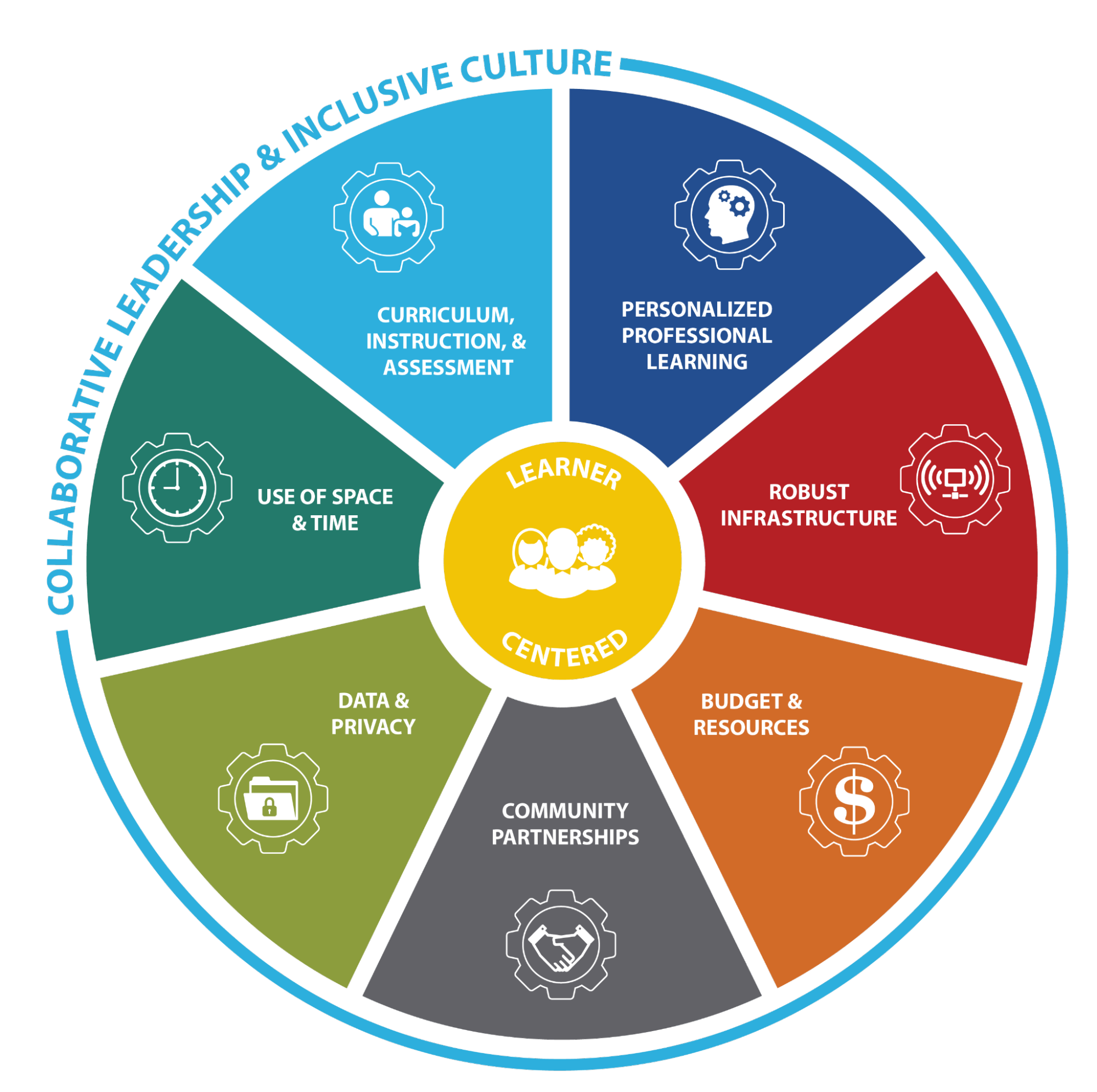
- Curriculum, Instruction, & Assessment: Ensures learning is rigorous, relevant, and aligned to real-world pathways, emphasizing deeper learning, learner agency, and aligned assessments.
- Personalized Professional Learning: Builds educator capacity through tailored, job-embedded professional growth that supports innovation and instructional shifts.
- Robust Infrastructure: Provides the technology, connectivity, and systems required to enable future ready teaching and learning.
- Budget & Resources: Aligns financial and human capital with strategic goals to ensure equity and long-term sustainability.
- Community Partnerships: Leverages relationships with employers, postsecondary institutions, and local organizations to co-create relevant, career-connected learning.
- Data & Privacy: Supports secure, responsible use of data to inform instruction, track progress, and safeguard student information.
- Use of Space & Time: Rethinks schedules, staffing, and learning environments to promote flexible, personalized, learner-centered models.
Each of the Four Design Pillars for Future Ready Pathways strategically aligns with multiple gears of the Future Ready Framework. This alignment ensures that pathway design is deeply supported by the systems-level conditions required for sustainability, scale, and equity. A strategic alignment can be seen in:
- Collaborative Leadership & Inclusive Culture (Pillars 1, 2, 3, 4)
- Curriculum, Instruction, & Assessment (Pillars 1, 2, 3, 4)
- Personalized Professional Learning (Pillars 1, 2, 3)
- Robust Infrastructure (Pillars 1, 2, 3)
- Budget & Resources (Pillars 1, 2, 3, 4)
- Community Partnerships (Pillars 1, 2, 3, 4)
- Data & Privacy (Pillars 1, 3, 4)
- Use of Space & Time (Pillars 1, 2, 3, 4)
When used together, the Framework and Design Pillars provide a powerful blueprint for building equitable, learner-centered systems that meet the needs of today’s learners and prepare them for tomorrow’s world.
In Summary
Future Ready Pathways is grounded in evidence-based, learner-centered practices and built upon career-connected exploration and four foundational design pillars: education and career navigation, dual enrollment, work-based learning, and industry-recognized credentials. These pillars provide the structural foundation for meaningful, future ready learning experiences that connect learners with and prepare them for the world beyond the classroom. When districts align their pathway work with the Future Ready Framework, they ensure that learner-centered design is not isolated or temporary, but deeply embedded into the very systems and structures that drive school and district transformation.
This approach isn’t about adding new programs, nor is this learner tracking version 2.0. It’s a comprehensive strategy for systems change, reimagining readiness through purpose-driven learning, policy alignment, and deeper community partnerships. By placing learners at the center and surrounding them with meaningful relationships, relevant opportunities, and personalized support, we can ensure that every learner graduates with clarity, confidence, and the readiness to shape their own future.
In the next section, we’ll dive deeper into career-connected exploration and each of the Four Design Pillars of Future Ready Pathways, sharing actionable strategies and models from the field to bring them to life.